
SWR Pipe Full Form: Meaning, Types and Sizes
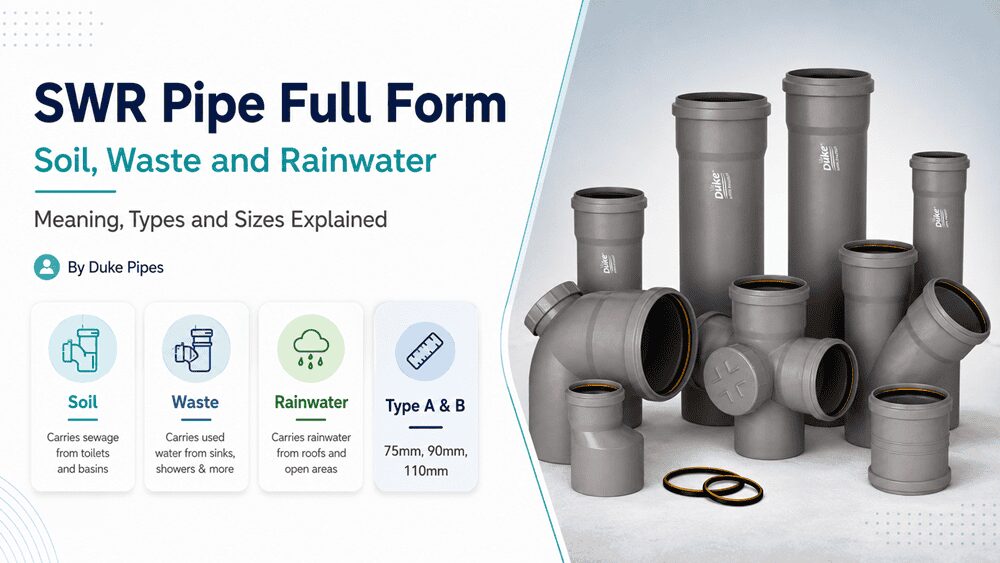
The full form of SWR pipe is Soil, Waste and Rainwater. An SWR pipe is a uPVC drainage pipe used to carry soil discharge, wastewater and rainwater from a building to the drainage or sewerage system. SWR pipes are widely used because they are lightweight, corrosion-resistant and easy to install for long-term building drainage.
What Is the Full Form of SWR Pipe?
SWR stands for Soil, Waste and Rainwater. Here is the simple meaning:
| Letter | Meaning | What It Carries |
|---|---|---|
| S | Soil | Toilet and WC discharge |
| W | Waste | Used water from bathrooms, kitchens, washbasins and floor drains |
| R | Rainwater | Rooftop, terrace and surface rainwater |
An SWR pipe system is the drainage network that removes soil discharge, wastewater and rainwater from a building. This term is also searched as “SWR full form in plumbing,” “SWR pipe ka full form,” “SWR pipe meaning” and “full form of SWR pipe” — the answer is the same: Soil, Waste and Rainwater.
What Is an SWR Pipe? (SWR Meaning in Plumbing)
An SWR pipe is a drainage pipe made from uPVC (unplasticized polyvinyl chloride), used for the soil, waste and rainwater lines of a building. In plumbing, it handles three types of discharge:
- Soil discharge from toilets
- Wastewater from bathrooms, kitchens and wash areas
- Rainwater from roofs, terraces and balconies
SWR pipes connect these drainage points to the building’s main drainage line, sewerage line, septic system or rainwater recharge system. They work as a gravity-based, non-pressure system — water and waste flow downward through slope and gravity, not under high pressure. Quality SWR pipes in India are made to the IS 13592:2013 standard. Duke uPVC SWR pipes are certified to this standard.
From our experience: In more than 25 years of manufacturing piping solutions in Gujarat, a common on-site mistake we see is using a light-duty Type A pipe on a main soil discharge line. For main soil lines and heavy-use drainage, Type B is generally preferred for its thicker wall and higher strength. Choosing the right type, size and fittings is one of the most important steps for a reliable, leak-resistant drainage system.
Why uPVC SWR Pipes Replaced Old Cast-Iron Pipes
Earlier buildings used cast-iron (CI) pipes for drainage. Today, uPVC SWR pipes are the common choice because they are:
- Lightweight and easy to transport
- Easy to cut, join and install
- Corrosion-resistant and rust-free
- Smooth inside for better flow
- Low maintenance, with matching fittings available
For these reasons, uPVC SWR pipes are used in homes, apartments, hospitals, hotels, commercial buildings and selected industrial drainage applications.
Where Are SWR Pipes Used?
SWR pipes are used wherever soil, waste or rainwater needs to be drained — bathroom and toilet lines, kitchen sink and washbasin drainage, floor and nahani traps, rainwater downpipes, terrace and balcony drainage, and rainwater harvesting systems. They are found in homes, apartments, hotels, hospitals, schools, malls, offices and factories.
SWR Pipe Types: Type A vs Type B
SWR pipes come in two types under IS 13592:2013:
- Type A (light duty): thinner wall — for rainwater, ventilation and light internal drainage.
- Type B (heavy duty): thicker wall — for soil and waste discharge, main lines and commercial/industrial drainage.
In short: use Type A for rainwater and light lines, Type B for soil/waste and heavy-duty lines. Many projects use both.
Read the full guide: SWR Pipe Type A vs Type B difference →
Common SWR Pipe Sizes

The common SWR pipe sizes used in building drainage are 75mm, 90mm and 110mm:
| Size | Inch | Common Use |
|---|---|---|
| 75mm | 2.5″ | Bathroom and kitchen waste lines, small drainage points |
| 90mm | 3″ | Residential and medium drainage lines |
| 110mm | 4″ | Toilet discharge and main drainage lines (most popular) |
The 110mm (4-inch) SWR pipe is the most common for main soil and drainage lines. See the full size chart with OD and wall-thickness values on our uPVC SWR pipe page.
SWR Pipe Standard in India (IS 13592)
Quality uPVC SWR pipes are manufactured to IS 13592:2013 (uPVC pipes for soil and waste discharge), and SWR fittings to IS 14735. Duke uPVC SWR pipes are made to IS 13592:2013 in Type A and Type B options.
SWR Pipe Fittings
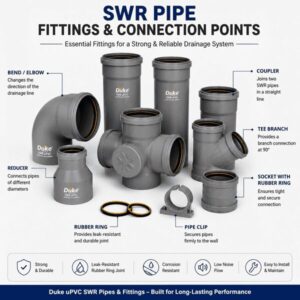
A complete SWR system needs the right fittings to connect lines, change direction and support drainage. Common SWR fittings include bends, single and double tees, couplers, reducers, P-traps, nahani/floor traps, door bends, vent cowls, cleaning pieces and pipe clips.
Read the full guide: SWR pipe fittings types, names and uses →
SWR vs Other Pipe Full Forms
| Term | Full Form | Main Use |
|---|---|---|
| SWR | Soil, Waste and Rainwater | Building drainage (above ground) |
| UDS | Underground Drainage System | Below-ground sewer and drainage |
| uPVC | Unplasticized Polyvinyl Chloride | Rigid pipe material |
| PVC | Polyvinyl Chloride | General plastic pipe material |
| CPVC | Chlorinated Polyvinyl Chloride | Hot and cold water supply |
For below-ground drainage, see the uPVC UDS Pipe.
Is SWR Pipe the Same as PVC Pipe?
Not exactly. An SWR pipe is made of uPVC and designed specifically for soil, waste and rainwater drainage. “PVC pipe” is a broader term for many plastic pipes used in supply, drainage and other applications. So they are related, but an SWR pipe is purpose-built for building drainage.
Read more: SWR pipe vs PVC pipe difference →
Duke uPVC SWR Pipe for Drainage Systems
Duke Pipes manufactures IS 13592:2013 certified uPVC SWR pipes in Type A and Type B, available in 75mm, 90mm and 110mm sizes. These pipes come with matching fittings for complete drainage systems. From Gujarat, the company supplies builders, contractors, plumbers, project buyers, dealers and distributors across India.
Explore Duke uPVC SWR Pipes → | Get SWR pipe price →
Frequently Asked Questions
What is the full form of SWR pipe?
SWR stands for Soil, Waste and Rainwater. It is a drainage pipe system that carries soil discharge, wastewater and rainwater from a building to the drainage or sewerage system.
What does SWR mean in plumbing?
In plumbing, SWR means the pipe system used for soil discharge, wastewater and rainwater drainage. It is generally a gravity-based, non-pressure system.
What is a uPVC SWR pipe?
A uPVC SWR pipe is a drainage pipe made from unplasticized PVC, used in building drainage for bathrooms, kitchens, toilets, rainwater lines and commercial drainage.
What is the difference between Type A and Type B SWR pipes?
Type A is light-duty (thinner wall) for rainwater, ventilation and light drainage. Type B is heavy-duty (thicker wall) for soil discharge, waste discharge and heavy-duty drainage lines.
What size SWR pipe is used for the main drain?
The 110mm (4-inch) SWR pipe is commonly used for main soil and drainage lines. 75mm and 90mm are used for smaller drainage connections.
What is the full form of SWR fittings?
SWR fittings are fittings used with Soil, Waste and Rainwater pipes — bends, tees, couplers, traps, reducers, vent cowls and clips, made to IS 14735.
Are SWR pipes used for rainwater drainage?
Yes. SWR pipes are used for rainwater drainage from roofs, terraces and balconies, and in rainwater harvesting and recharge systems.
References: Bureau of Indian Standards — IS 13592:2013 (uPVC pipes for soil and waste discharge) and IS 14735 (uPVC fittings for soil and waste discharge). Specifications based on Duke Pipes’ own product range and manufacturing experience.