HDPE Pipe for Agriculture: Benefits, Sizes, Price & Uses (India Guide)
In farming, a good watering system is very important for keeping crops healthy and increasing their yield. But if you don’t have the right piping system, problems like water leaks, uneven flow, and having to do a lot of upkeep can make things more expensive and less efficient overall.
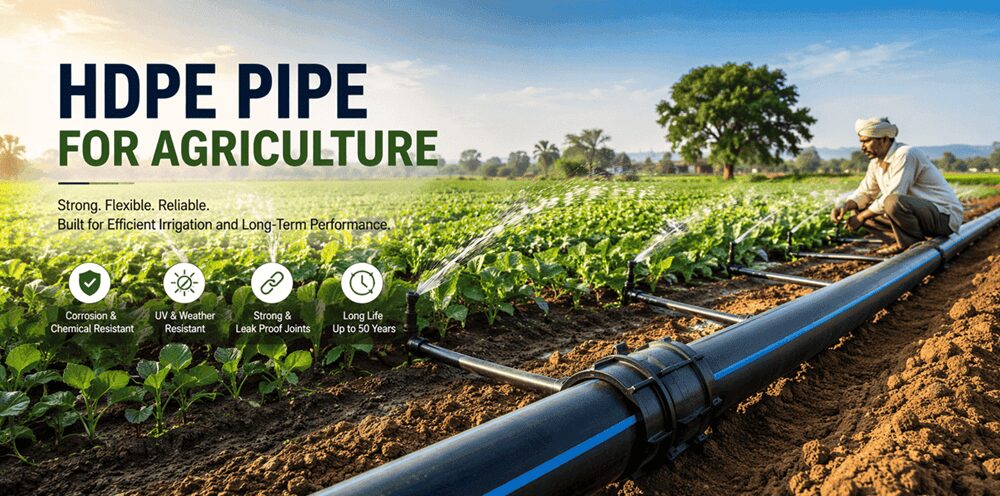
In recent years, HDPE pipes for agriculture have become a preferred choice among farmers due to their durability, flexibility, and long service life. HDPE pipes are different from other types of pipes because they are made to work reliably even in harsh field situations.
In this comprehensive guide, you will learn:
- What HDPE pipes are and how they work
- Key benefits of using HDPE pipes in farming
- Available sizes and specifications
- Step-by-step installation process
- HDPE vs PVC comparison
This guide will help you make the right choice if you want to improve your watering system.
Why Farmers Lose Water (And Profit)
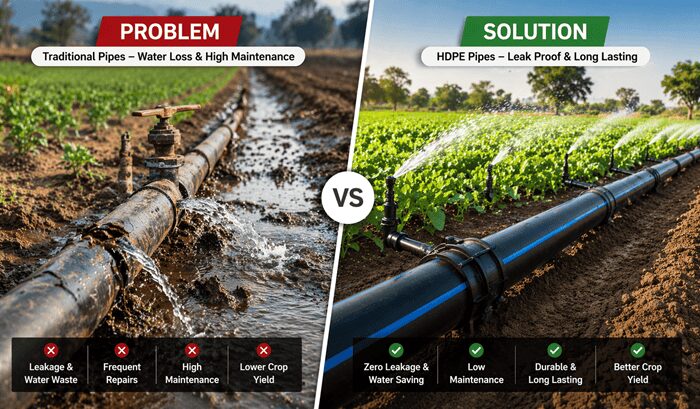
Many farmers in India lose 20–30% of their irrigation water every season. This isn’t because they don’t have enough water, but because pipes leak or break, and systems don’t work well.
Small issues like cracked pipes, loose joints, and uneven flow may seem minor at first. But over time, they lead to:
- Higher water bills
- Increased maintenance costs
- Lower crop yield
If your irrigation system is weak, you’re not just wasting water — you’re losing money every
What is HDPE Pipe for Agriculture?
HDPE (High-Density Polyethylene) pipe is a durable, flexible plastic pipe designed for efficient water transport in farming.
It is widely used in modern irrigation systems because of its:
- High strength
- Leak-proof joints
- Long lifespan (20–50 years)
Common Uses:
- Drip irrigation systems
- Sprinkler irrigation
- Borewell connections
- Farm water supply
Today, HDPE pipes are considered one of the most reliable irrigation solutions in India.
Common Irrigation Problems in Indian Farms
Most irrigation failures don’t happen suddenly — they build over time.
Typical issues farmers face:
- Water leakage from joints
- Pipes cracking under pressure or heat
- Sunlight (UV) damaging pipe material
- Uneven water flow in large fields
These problems increase:
- Water wastage
- Repair costs
- Crop inconsistency
That’s why many farmers are switching to HDPE irrigation pipes for long-term reliability.
Benefits of HDPE Pipe for Agriculture
1. Minimal Water Loss
HDPE pipes use fusion welding joints, reducing leakage by up to 30% compared to traditional systems.
2. Long Lifespan (20–50 Years)
Once installed properly, HDPE pipes can last for decades with minimal maintenance.
3. High Flexibility
Perfect for uneven farmland — pipes adjust without cracking or breaking.
4. UV & Weather Resistance
Designed to handle extreme Indian weather conditions without damage.
5. Chemical Resistance
Fertilizers and chemicals do not affect pipe quality.
6. Low Maintenance Cost
Less repair = more savings over time.
Uses of HDPE Pipes in Farming
HDPE pipes are highly versatile and suitable for different irrigation systems:
- Drip Irrigation: Direct water delivery to roots
- Sprinkler Systems: Even water distribution
- Borewell Systems: Efficient water transfer
- Large Farms: Long-distance water flow without pressure loss
This makes HDPE pipes ideal for modern agriculture in India.
HDPE Pipe Sizes, Dimensions & Specifications
Choosing the correct pipe size is critical for performance.
Common Sizes:
- 20 mm – 110 mm: Drip irrigation
- 110 mm+: Main supply lines
Key Factors to Consider:
- Diameter: Determines water flow
- Wall Thickness: Affects durability
- Pressure Rating (PN): Load handling capacity
Always select pipe specifications based on your farm size and irrigation type.
HDPE Pipe Installation Guide
Proper installation ensures long-term performance:
- Plan irrigation layout
- Dig trenches where required
- Lay pipes carefully
- Join pipes using proper methods (fusion welding recommended)
- Test system before full operation
Important: Most failures occur due to poor installation, not pipe quality.
HDPE vs PVC Pipe for Agriculture
| Feature | HDPE Pipe | PVC Pipe |
|---|---|---|
| Flexibility | High | Low |
| Lifespan | 20–50 years | 10–25 years |
| Breakage Risk | Very Low | Moderate |
| Leakage | Minimal | Possible |
| Maintenance | Low | Higher |
HDPE pipes are a better long-term investment for agriculture.
Why HDPE Pipes Are Best for Indian Farmers
Indian farming conditions demand durability and performance:
- High temperatures
- Uneven land
- Long-distance irrigation
HDPE pipes perform better because they:
- Resist cracking in heat
- Adjust to land conditions
- Maintain consistent water flow
- Reduce water wastage
That’s why HDPE pipes are becoming the preferred choice for Indian farmers.
HDPE Pipe Price in India (2026)
HDPE pipe prices depend on:
- Pipe size (diameter)
- Thickness
- Pressure rating
- Brand quality
Instead of choosing the cheapest option, focus on:
- ISI-certified quality
- Long-term durability
- Reduced maintenance cost
How to Choose the Right HDPE Pipe
Before buying, check:
- ISI certification
- Correct pressure rating
- Adequate thickness
- Trusted manufacturer
Choosing a reliable brand like Duke Pipes HDPE solutions ensures consistent performance and durability.
Real Field Experience
In many farms across India, traditional PVC pipes start leaking or cracking within a few years due to pressure and heat.
However, properly installed HDPE systems have shown:
- Better durability
- Lower maintenance
- Consistent water flow over long distances
This is why experienced farmers are increasingly switching to HDPE pipe.
FAQs
1.What is HDPE pipe used for in agriculture?
HDPE pipes are used for irrigation systems, including drip, sprinkler, and borewell water supply.
2.Which HDPE pipe is best for drip irrigation?
Smaller diameter pipes (20–63 mm) with proper pressure rating are ideal.
3.How long do HDPE pipes last?
Typically 20 to 50 years, depending on usage and installation.
4.Is HDPE better than PVC for farming?
Yes, HDPE offers better flexibility, durability, and long-term performance.
5.Can HDPE pipes be used underground?
Yes, they are widely used for underground irrigation and water supply systems.
Final Thoughts
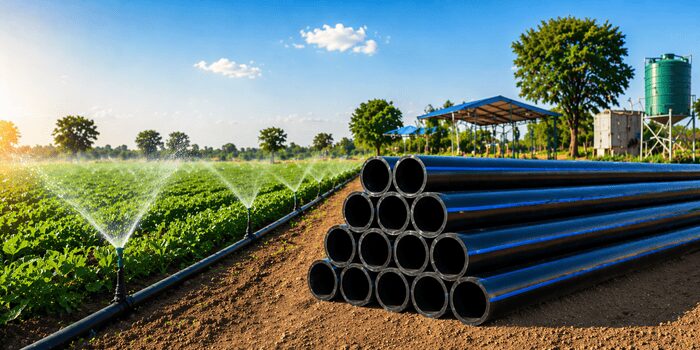
HDPE pipes are not just an upgrade — they are a long-term investment in water efficiency, cost savings, and crop productivity.
If you want a reliable irrigation system that performs for years:
Need help choosing the right pipe? Contact Duke Pipes today.
Reviewed by: Duke Pipes Technical Team