
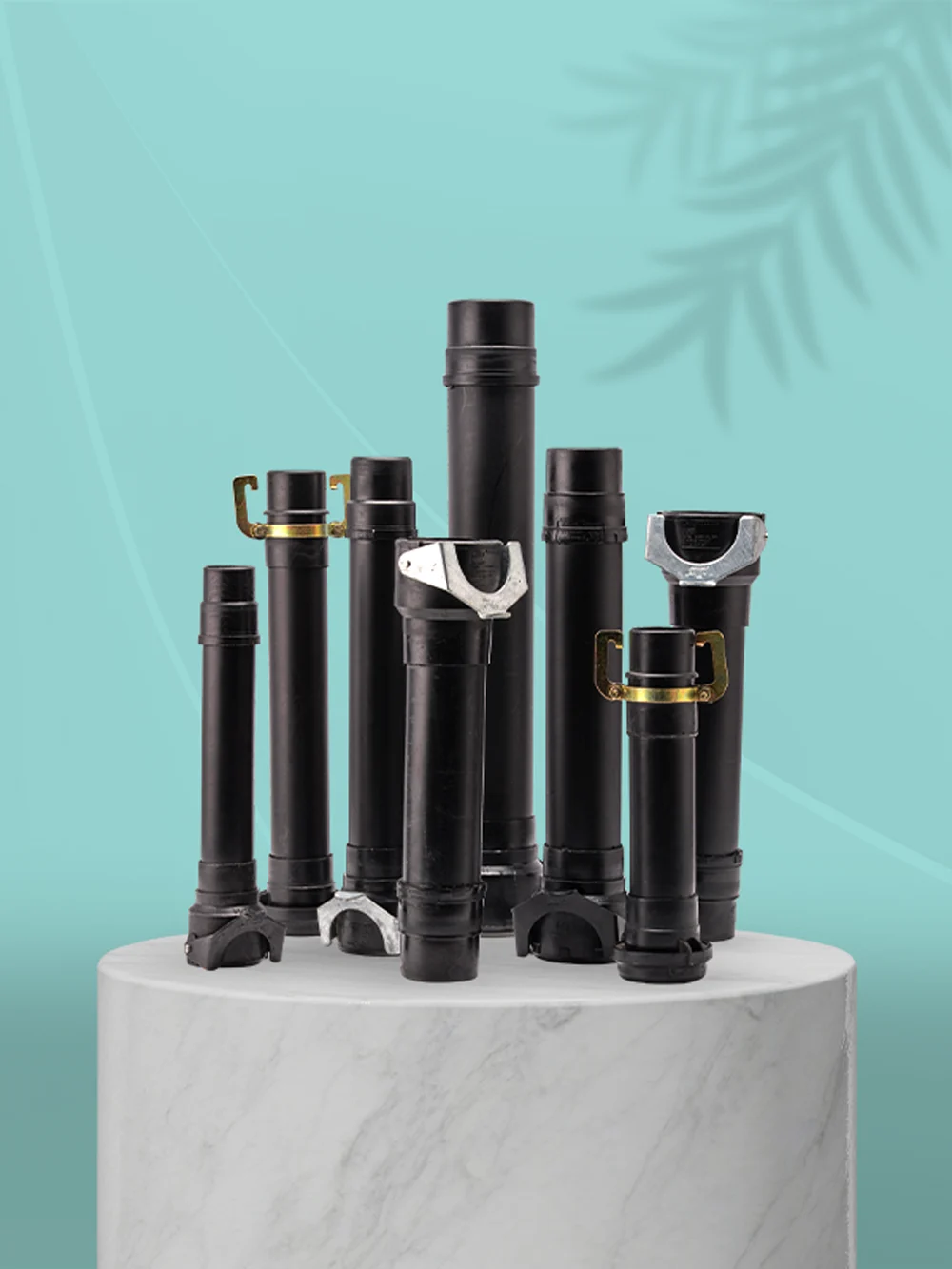
Duke HDPE sprinkler pipes are designed for agricultural sprinkler irrigation, helping distribute water across farmland through a portable piping system. Made from High Density Polyethylene (HDPE), these sprinkler pipes are available in nominal diameters from 40 mm to 110 mm, with a 6-metre effective length and different pressure classes according to pipe size.
Duke Pipes offers a quick-coupling sprinkler pipe system that allows irrigation lines to be connected, disconnected and repositioned across agricultural fields. The system is suitable for farmers, irrigation contractors, agricultural dealers and projects requiring portable sprinkler irrigation.
Compatible sprinkler fittings, couplers, risers and nozzles can be used to configure an irrigation system according to field requirements.
Looking for sprinkler pipes for your farm or project? Contact Duke Pipes for product specifications and a quotation.
HDPE Sprinkler Pipe Specifications at a Glance
| Specification | Duke HDPE Sprinkler Pipe |
|---|---|
| Product | HDPE Sprinkler Pipe |
| Manufacturer | Duke Pipes |
| Material | High Density Polyethylene |
| Application | Agricultural sprinkler irrigation |
| Nominal diameters | 40, 50, 63, 75, 90 and 110 mm |
| Effective pipe length | 6 metres |
| Listed pressure classes | 0.25, 0.32, 0.40 and 0.60 MPa |
| Connection system | Quick coupling |
| Accessories | Compatible fittings, couplers, risers and sprinkler nozzles |
| Intended users | Farmers, irrigation contractors, dealers and project buyers |
Important: Pressure-class availability varies according to nominal pipe diameter. Not every pipe size is available in all four classes. Refer to the technical specifications before selecting a pipe.
What Is an HDPE Sprinkler Pipe?
An HDPE sprinkler pipe is a High Density Polyethylene pipe used to transport pressurized water through a sprinkler irrigation system. Water flows through the sprinkler pipe network to compatible sprinkler heads, which distribute it over the required field area.
Portable sprinkler pipes with quick-coupling connections can be disconnected and moved between different sections of farmland.
This arrangement can be useful for farmers who need to irrigate multiple areas using a movable sprinkler system.
How Does a Sprinkler Irrigation Pipe System Work?
A sprinkler irrigation system delivers water from a suitable source through a pump or pressurized water supply into a connected pipe network.
The water then reaches sprinkler heads, which distribute it across the designated irrigation area.
A typical portable sprinkler arrangement may include:
Water source and suitable pumping equipment
Main water-supply pipeline
HDPE sprinkler pipes
Quick-coupling connections
Compatible fittings and risers
Sprinkler nozzles or heads
The actual system configuration depends on water availability, pump capacity, field size, sprinkler spacing and operating pressure.
HDPE Sprinkler Pipe Sizes and Pressure Ratings
Duke HDPE sprinkler pipes are available in nominal diameters ranging from 40 mm to 110 mm.
Each listed pipe has an effective length of 6 metres, with pressure-class and wall-thickness options depending on nominal diameter.
Available Sprinkler Pipe Sizes
| Nominal Diameter | Effective Length | Available Pressure Classes |
|---|---|---|
| 40 mm | 6 metres | Class 4 |
| 50 mm | 6 metres | Class 3, Class 4 |
| 63 mm | 6 metres | Class 2, Class 3, Class 4 |
| 75 mm | 6 metres | Class 1, Class 2, Class 3, Class 4 |
| 90 mm | 6 metres | Class 1, Class 2, Class 3, Class 4 |
| 110 mm | 6 metres | Class 1, Class 2, Class 3, Class 4 |
HDPE Sprinkler Pipe Pressure Classes
The Duke technical chart identifies the following pressure classes:
| Pressure Class | Nominal Pressure |
|---|---|
| Class 1 | 0.25 MPa |
| Class 2 | 0.32 MPa |
| Class 3 | 0.40 MPa |
| Class 4 | 0.60 MPa |
Which sprinkler pipe pressure class should you choose?
The appropriate pressure class depends on the system’s operating pressure, pump characteristics, field layout and irrigation design.
Pipe diameter and pressure class should be selected together. A larger pipe diameter does not automatically mean a higher pressure rating.
HDPE Sprinkler Pipe Wall Thickness Chart
The following values summarize the minimum and maximum wall thicknesses shown in Duke’s product technical chart.
All values are in millimetres.
| Diameter | Class 1 | Class 2 | Class 3 | Class 4 |
|---|---|---|---|---|
| 40 mm | — | — | — | 2.3–2.8 |
| 50 mm | — | — | 2.0–2.4 | 2.9–3.4 |
| 63 mm | — | 2.0–2.4 | 2.5–2.9 | 3.8–4.4 |
| 75 mm | 2.0–2.4 | 2.5–2.9 | 3.0–3.4 | 4.5–5.2 |
| 90 mm | 2.2–2.6 | 2.9–3.4 | 3.5–4.1 | 5.3–6.1 |
| 110 mm | 2.7–3.2 | 3.4–3.9 | 4.2–4.8 | 6.5–7.4 |
A dash indicates that the corresponding combination is not listed in the supplied Duke technical chart.
For complete outside-diameter tolerances, effective length and wall-thickness details, refer to the original Technical Parameters table on this product page.
How to Choose the Right Sprinkler Pipe Size
Selecting the correct sprinkler pipe size involves more than choosing a nominal diameter.
Consider:
Required water flow: Determine the flow needed by the irrigation system.
Available pressure: Check pump output and expected operating conditions.
Field dimensions: Consider the total irrigation area and pipeline layout.
Sprinkler requirements: Check the flow and pressure requirements of compatible sprinkler heads.
Pressure class: Select a pipe class appropriate for the intended operating conditions.
Connections: Confirm compatibility with the selected couplers, fittings and risers.
A suitable irrigation-system design helps determine the required pipe diameter and compatible components.
Quick-Coupling Sprinkler Pipe System
Duke HDPE sprinkler pipes use a quick-coupling arrangement to support practical installation and movement of irrigation lines.
A quick-coupling system allows compatible pipe sections to be joined and separated without permanently fixing the entire sprinkler pipeline.
This is useful in agricultural fields where portable sprinkler lines need to be moved during irrigation.
How Do Quick-Coupling Sprinkler Pipes Work?
Compatible couplers connect individual pipe lengths to form an irrigation pipeline.
The coupling arrangement uses sealing components to create connections suitable for the specified system. Duke’s product information identifies double-collared natural rubber rings and friction-welded connections on applicable components.
The assembled irrigation line should be checked for correct coupling, seal placement and operating pressure before use.
Benefits of Quick-Coupling Sprinkler Pipes
Easier connection and disconnection of compatible pipe sections
Practical relocation across different field areas
Reduced need for permanent pipeline positioning
Convenient handling during portable irrigation operations
Compatibility with suitable sprinkler fittings and accessories
The performance of the complete connection depends on correct installation, compatible components and operating conditions.
Features and Benefits of Duke HDPE Sprinkler Pipes
Corrosion-Resistant HDPE Material
High Density Polyethylene does not rust like metallic piping materials, making it suitable for many agricultural irrigation environments.
UV-Stabilized Construction
Duke’s listed HDPE sprinkler pipe range uses UV-stabilized material intended for outdoor agricultural applications.
Lightweight Handling
HDPE pipes are relatively lightweight, making them practical to transport and reposition during irrigation operations.
Smooth Internal Surface
The smooth internal surface supports water movement through the pipeline and helps limit friction losses.
Quick-Coupling Connections
Compatible quick-coupling components make connecting, disconnecting and relocating sprinkler lines more convenient.
Multiple Pressure Classes
The listed product range includes different pressure classes to suit compatible irrigation-system requirements.
Six-Metre Effective Length
The nominal sizes in Duke’s published sprinkler pipe range have a 6-metre effective length.
HDPE Sprinkler Pipe Fittings and Accessories
A sprinkler irrigation system requires compatible fittings and accessories in addition to the main pipe.
Depending on the irrigation layout, the system may use:
Quick couplers
Sprinkler pipe fittings
Sprinkler risers
Sprinkler nozzles
Clamps
Connecting components
Why Are Compatible Sprinkler Fittings Important?
Sprinkler fittings connect the different components of an irrigation system.
Using suitable fittings helps maintain the intended pipe connection, sprinkler positioning and system operation.
Fittings must be compatible with the nominal pipe diameter, connection type and intended pressure.
For bulk orders or complete sprinkler-system requirements, contact Duke Pipes with the pipe and accessory specifications.
Applications of HDPE Sprinkler Pipes
Sprinkler Pipes for Agricultural Irrigation
HDPE sprinkler pipes are used to distribute water across agricultural fields through appropriately designed sprinkler systems.
Depending on irrigation requirements, such systems may be considered for crops including:
Wheat
Cotton
Soybean
Groundnut
Gram
Pulses
Vegetables
The suitability of sprinkler irrigation depends on crop requirements, soil conditions, water availability and system design.
Portable Irrigation Across Farmland
Quick-coupling sprinkler pipes can be useful when irrigation lines need to be repositioned across different parts of a farm.
Instead of operating from a permanently fixed sprinkler-line position, compatible sections can be disconnected and relocated as required.
Sprinkler Irrigation on Uneven Fields
Sprinkler irrigation may be useful on suitable uneven or undulating farmland where conventional surface-water distribution is difficult.
Appropriate pressure, sprinkler spacing and field-layout planning are necessary to achieve the intended irrigation coverage.
Landscape and Playground Irrigation
Suitable sprinkler piping systems may also be used for watering landscapes, playgrounds and open green areas.
Selected Industrial Water-Spraying Applications
Depending on technical requirements, compatible sprinkler systems may be considered for selected water-spraying and dust-control applications.
Product suitability must be verified against the operating conditions of the complete installation.
Who Should Choose Duke HDPE Sprinkler Pipes?
Duke HDPE sprinkler pipes can be considered by buyers looking for a portable agricultural sprinkler irrigation piping system.
Typical buyers include:
Farmers and agricultural landowners
Irrigation contractors
Irrigation-system installers
Pipe and agricultural equipment dealers
Agricultural project contractors
Bulk and institutional buyers
What Should Buyers Check Before Ordering?
Before purchasing, confirm the required nominal diameter, pressure class, quantity and compatible fittings.
For complete sprinkler installations, provide the field layout and available operating pressure so the system requirements can be evaluated.
HDPE Sprinkler Pipe Price in India
What Is the Price of an HDPE Sprinkler Pipe?
HDPE sprinkler pipe prices depend on nominal diameter, pressure class, order quantity, required accessories and delivery location.
A pipe-only quotation may differ from a complete sprinkler-system quotation that includes compatible couplers, risers, sprinkler heads and other components.
Factors Affecting Sprinkler Pipe Prices
Pipe diameter: Different nominal diameters have different product specifications and material requirements.
Pressure class: Wall thickness and specified pressure capacity vary by class and diameter.
Quantity: The total number of pipe lengths affects the order requirement.
Fittings and accessories: Couplers, risers, nozzles and other components contribute to total system cost.
Delivery location: Transportation and supply arrangements can affect the final quotation.
Request a Sprinkler Pipe Quotation
For an accurate product quotation, share:
Required pipe diameter
Pressure class, if known
Number of 6-metre pipe lengths
Required fittings and accessories
Delivery location or PIN code
Intended agricultural or project application
Phone: +91 73920 73920
Email: [email protected]
Request HDPE Sprinkler Pipe Price
HDPE Sprinkler Pipe Manufacturer in India — Duke Pipes
Duke Pipes is a Gujarat-based pipe manufacturer with manufacturing experience dating back to 1998.
Its HDPE sprinkler pipe range includes products designed for agricultural irrigation, with different nominal diameters, pressure classes and compatible sprinkler-system components.
The published technical information helps farmers, contractors, dealers and other buyers compare pipe dimensions, wall thicknesses and available pressure classes before enquiring.
For larger water-distribution or mainline piping requirements, explore Duke HDPE Pipes.
Why Choose Duke HDPE Sprinkler Pipes?
Duke’s sprinkler pipe range offers product-specific features for agricultural irrigation:
Nominal diameters from 40 mm to 110 mm
6-metre effective pipe length
Diameter-specific pressure classes
Portable quick-coupling connections
Corrosion-resistant HDPE material
UV-stabilized construction
Compatible fittings and sprinkler accessories
Published technical dimensions and wall-thickness information
Support for bulk and project enquiries
The correct pipe and accessory selection should be based on the irrigation-system requirements.
Get an HDPE Sprinkler Pipe Quotation from Duke Pipes
Looking for sprinkler pipes for agricultural irrigation or a bulk farming project?
Duke Pipes offers HDPE sprinkler pipes in multiple nominal diameters and pressure classes, along with compatible irrigation-system fittings.
Share your product specifications, required quantity and delivery location to enquire about availability and pricing.
Call: +91 73920 73920
Email: [email protected]
Technical Parameters
| Nominal Diameter | Effective Length (mtr) | OD (mm) | (Class – 1) (0.25 MPa) Wall Thickness | (Class – 2) (0.32 MPa) Wall Thickness | (Class – 3) (0.40 MPa) Wall Thickness | (Class – 4) (0.60 MPa) Wall Thickness | ||||||
|---|---|---|---|---|---|---|---|---|---|---|---|---|
| mm | inch | min | max | min | max | min | max | min | max | min | max | |
| 40 | 1.5″ | 6.0 | 40.0 | 40.4 | – | – | – | – | – | – | 2.3 | 2.8 |
| 50 | 2.0″ | 6.0 | 50.0 | 50.5 | – | – | – | – | 2.0 | 2.4 | 2.9 | 3.4 |
| 63 | 2.25″ | 6.0 | 63.0 | 63.6 | – | – | 2.0 | 2.4 | 2.5 | 2.9 | 3.8 | 4.4 |
| 75 | 2.50″ | 6.0 | 75.0 | 75.7 | 2.0 | 2.4 | 2.5 | 2.9 | 3.0 | 3.4 | 4.5 | 5.2 |
| 90 | 3.0″ | 6.0 | 90.0 | 90.8 | 2.2 | 2.6 | 2.9 | 3.4 | 3.5 | 4.1 | 5.3 | 6.1 |
| 110 | 4.0″ | 6.0 | 110.0 | 111.0 | 2.7 | 3.2 | 3.4 | 3.9 | 4.2 | 4.8 | 6.5 | 7.4 |